Industrial HMIs are built to withstand demanding environments. They serve as the primary point of interaction between operators and the equipment that keeps facilities running, providing access to critical system data, alarms, diagnostics, and controls.
But while HMI technology has become increasingly robust, the environments in which these interfaces operate continue to present challenges that can affect both performance and longevity.
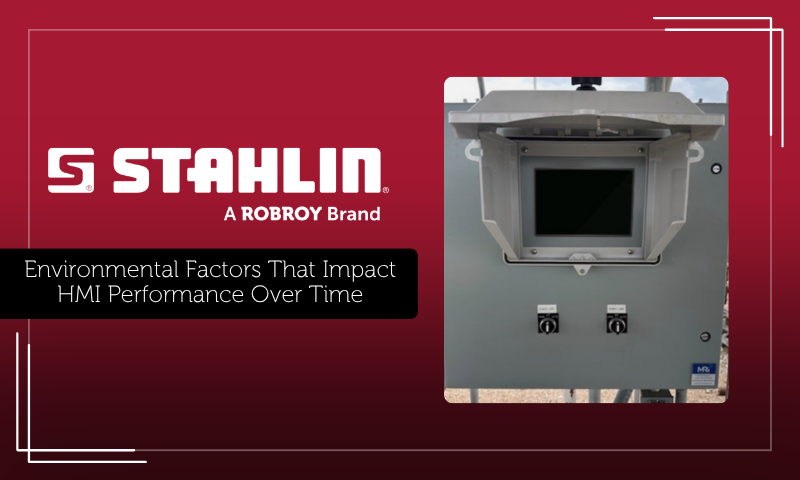
That's why more facilities are beginning to look beyond enclosure protection alone. Solutions like Stahlin® SolarShield™ HMI Covers reflect a broader shift in thinking—one that recognizes protecting the interface operators rely on every day is just as important as protecting the electronics behind it. After all, an HMI can't support efficient operations if operators struggle to clearly see or confidently interact with the display.
Environmental exposure rarely causes immediate failure. Instead, it works gradually. Day after day, sunlight, airborne contaminants, moisture, and industrial residue interact with the HMI surface, slowly impacting visibility, usability, and the overall operator experience.
Understanding these environmental factors isn't just about protecting an investment—it's about ensuring operators can confidently access the information they need, whenever they need it.
Sunlight & UV Exposure: The Most Visible Threat
For outdoor HMIs, sunlight is often the first environmental challenge operators notice.
Direct sun creates glare and reflections that can wash out displays, making critical information difficult to read. Operators may find themselves changing positions, shielding the screen with a hand, or waiting for a better viewing angle before they can safely interpret data. During routine maintenance, this can be frustrating. During troubleshooting or emergency response, it can slow decision-making when every second counts.
While glare affects immediate usability, prolonged UV exposure creates a different challenge altogether.
Over time, ultraviolet radiation can contribute to the degradation of exposed materials, including plastic bezels, overlays, and display surfaces. Continuous exposure may lead to discoloration, fading, or reduced optical clarity, gradually diminishing the readability of the interface and affecting its long-term appearance.
Because these effects develop slowly, they're easy to overlook—until the HMI is noticeably more difficult to use than it once was.
Airborne Contaminants: The Wear You Can't Always See
Not every threat to an HMI arrives with severe weather.
In many industrial environments, airborne dust, dirt, and sand are a constant reality. Whether generated by manufacturing processes, construction activity, wastewater facilities, mining operations, or windblown debris, these fine particles continually settle on exposed interfaces.
At first, the impact may seem insignificant. A quick wipe restores visibility, and work continues.
Over time, however, repeated cycles of contamination and cleaning can begin to take their toll. Fine abrasive particles may create micro-scratches on display surfaces, reducing optical clarity and making screens increasingly difficult to read in challenging lighting conditions. Dirt buildup can also obscure information and require more frequent cleaning to maintain visibility.
The result isn't necessarily equipment failure—it's a gradual decline in the quality of every interaction an operator has with the HMI.
Moisture & Industrial Residue: Environmental Exposure Doesn't End with the Weather
Industrial environments expose HMIs to far more than rain.
Moisture from precipitation, humidity, washdowns, and condensation can leave behind mineral deposits and residue that reduce screen clarity over time. In manufacturing environments, oils, grease, coolants, and other process contaminants introduce another layer of buildup that can further obscure displays and increase cleaning requirements.
These conditions don't just affect appearance—they influence how easily operators can interact with the interface.
Every additional cleaning cycle, every layer of residue, and every environmental contaminant contributes to the ongoing wear of the HMI surface. Individually, these effects may seem minor. Collectively, they can have a meaningful impact on long-term usability and maintenance.
Protecting the Interface Operators Depend On
When discussing HMI protection, it's easy to focus solely on the electronics housed behind the enclosure door. But the interface itself deserves equal consideration.
After all, the HMI is where operators make decisions, acknowledge alarms, monitor performance, and keep critical processes moving. If environmental exposure makes that interface more difficult to read or operate, it affects more than the equipment—it affects the people using it.
That's why protecting an HMI should extend beyond safeguarding internal components. It should also include preserving the visibility, usability, and long-term condition of the interface operators rely on every day.
Stahlin® SolarShield™ HMI Covers are designed with this philosophy in mind. By helping shield HMIs from direct sunlight, UV exposure, airborne contaminants, moisture, and industrial residue, SolarShield helps preserve screen visibility while supporting long-term HMI performance in demanding environments.
Because protecting an HMI isn't simply about extending the life of a screen. It's about helping ensure operators have clear, reliable access to the information they need—today, tomorrow, and for years to come.